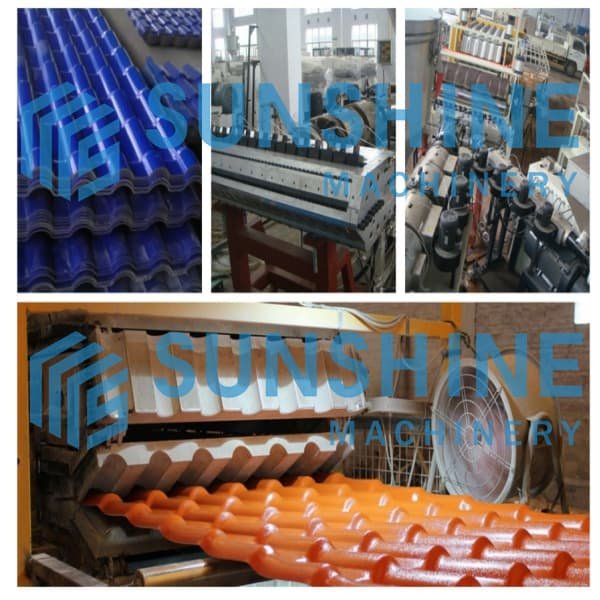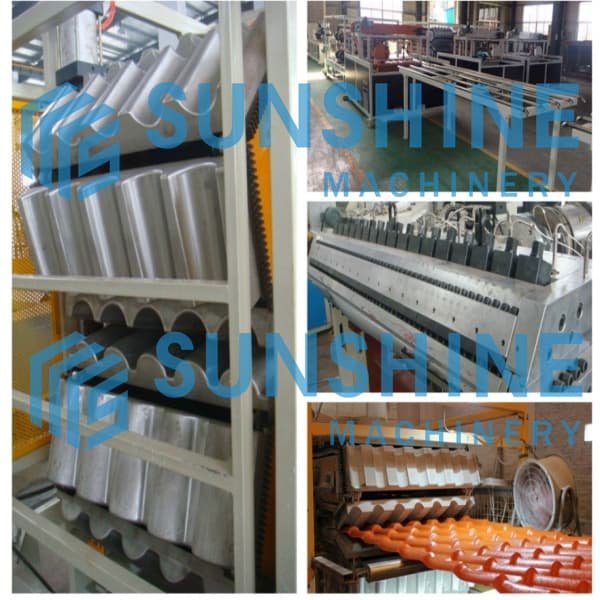
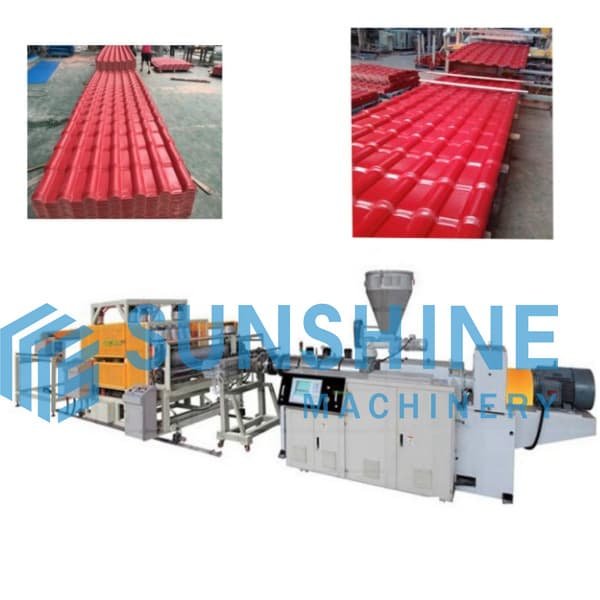
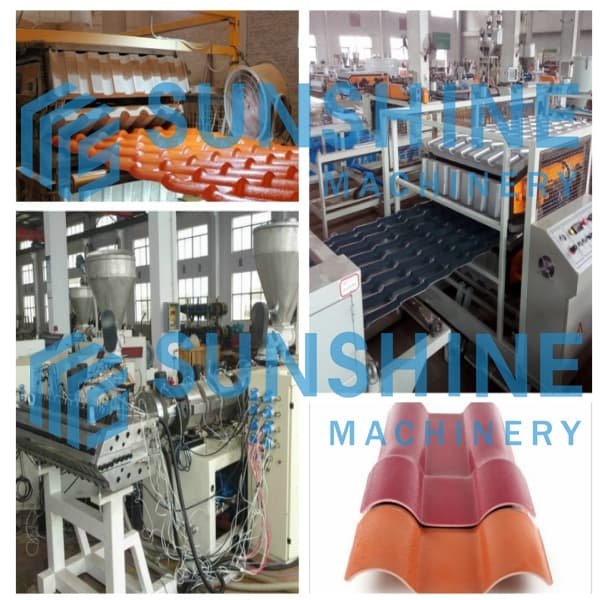
Let us introduce the PVC Glazed Tile Machine to you.
Introduction:
PVC Glazed Tile Machines are primarily utilized for manufacturing synthetic resin roofing tiles, typically employing a multi-layer composite structure to enhance their durability.
Consist of PVC Glazed Tile Machine:
Extruder:
Typically, a conical twin-screw extruder (e.g., SJZ80/156) is employed to extrude the main PVC layer, ensuring stable plasticization and high output rates (typically 300–600 kg/h), while a smaller single-screw co-extruder is used to extrude the surface ASA layer.
T-Die and Distributor:
A specially designed die shapes the molten material into a flat sheet, while the distributor manages and regulates the flow of the multi-layered materials.
Embossing and Forming Machine:
The hot sheet passes through embossing rollers to receive surface texturing, then enters a forming machine (utilizing compression or vacuum-assisted technology) to be pressed into the corrugated profile of the roof tiles.
Cutting and Stacking:
Controlled by a PLC system, an automatic saw or flying cutter precisely cuts the tiles to the predetermined length without interrupting the production line.
Features:
Durability:
The highly weather-resistant ASA coating ensures a service life of over 30 years for the tiles, with minimal fading.
Lightweight:
Weighing only about one-sixth as much as traditional clay tiles, they effectively reduce the structural load on the building.
Superior Protective Performance:
They offer excellent fire resistance (flame retardancy), waterproofing, and sound insulation properties.